• About
    • About the Center for Public Interest Communications
    • What is Public Interest Communications?
    • Our Team
    • Theories We Use
    • Center Updates
    • Programs & Affiliates
      • frank gathering
      • The Research Prize in Public Interest Communications
      • Journal of Public Interest Communications
      • UF Programs
    • Our Approach to Generative Artificial Intelligence
    • Contact Us
    • Job: Center Research Assistant
  • SOLUTIONS
    • Beyond Raising Awareness
    • Become a Great Science Communicator
    • Fixing Data’s Demand Problem
    • Why your narrative change strategy isn’t working
    • How to reach people who don’t already agree with you
    • Why Your Science Communication Isn’t Landing
    • Services
      • Strategy Consulting
      • Issue Research
      • Training – Frameworks and Custom
  • Frameworks
  • Training
    • Programs
    • Professional Development
      • Learn on your schedule
      • Beyond raising awareness: How to create lasting change
      • Science Communications Course 
      • Strategic Communications Academy for UF Leaders & Scholars
  • RESOURCES
    • Case Studies
    • Newsletter
    • Scholarship & Publications
Center for Public Interest Communications
Support
  • About
    • About the Center for Public Interest Communications
    • What is Public Interest Communications?
    • Our Team
    • Theories We Use
    • Center Updates
    • Programs & Affiliates
      • frank gathering
      • The Research Prize in Public Interest Communications
      • Journal of Public Interest Communications
      • UF Programs
    • Our Approach to Generative Artificial Intelligence
    • Contact Us
    • Job: Center Research Assistant
  • SOLUTIONS
    • Beyond Raising Awareness
    • Become a Great Science Communicator
    • Fixing Data’s Demand Problem
    • Why your narrative change strategy isn’t working
    • How to reach people who don’t already agree with you
    • Why Your Science Communication Isn’t Landing
    • Services
      • Strategy Consulting
      • Issue Research
      • Training – Frameworks and Custom
  • Frameworks
  • Training
    • Programs
    • Professional Development
      • Learn on your schedule
      • Beyond raising awareness: How to create lasting change
      • Science Communications Course 
      • Strategic Communications Academy for UF Leaders & Scholars
  • RESOURCES
    • Case Studies
    • Newsletter
    • Scholarship & Publications
  • Center Update

Winners of 2020 Research Prize Have Good News for How to Fight Bad News

  • February 14, 2020
  • 2 minute read
Total
0
Shares
0
0
0
0

The 2020 Research Prize in Public Interest Communications has been awarded to two scholars from Cambridge University for a scientific paper that explores how people can be “inoculated” from falling victim to false information online.

The $10,000 prize for Fake News Game Confers Psychological Resistance Against Online Misinformation was awarded February 7 at the frank2020 gathering in Gainesville, Fla., to Jon Roozenbeek, Department of Slavonic Studies and Department of Psychology, University of Cambridge; and Sander van der Linden Department of Psychology, School of Biological Sciences.

Jon Roozenbeek, co-author of 2020 Research Prize winning paper, seated with his trophy on the last day of frank2020.

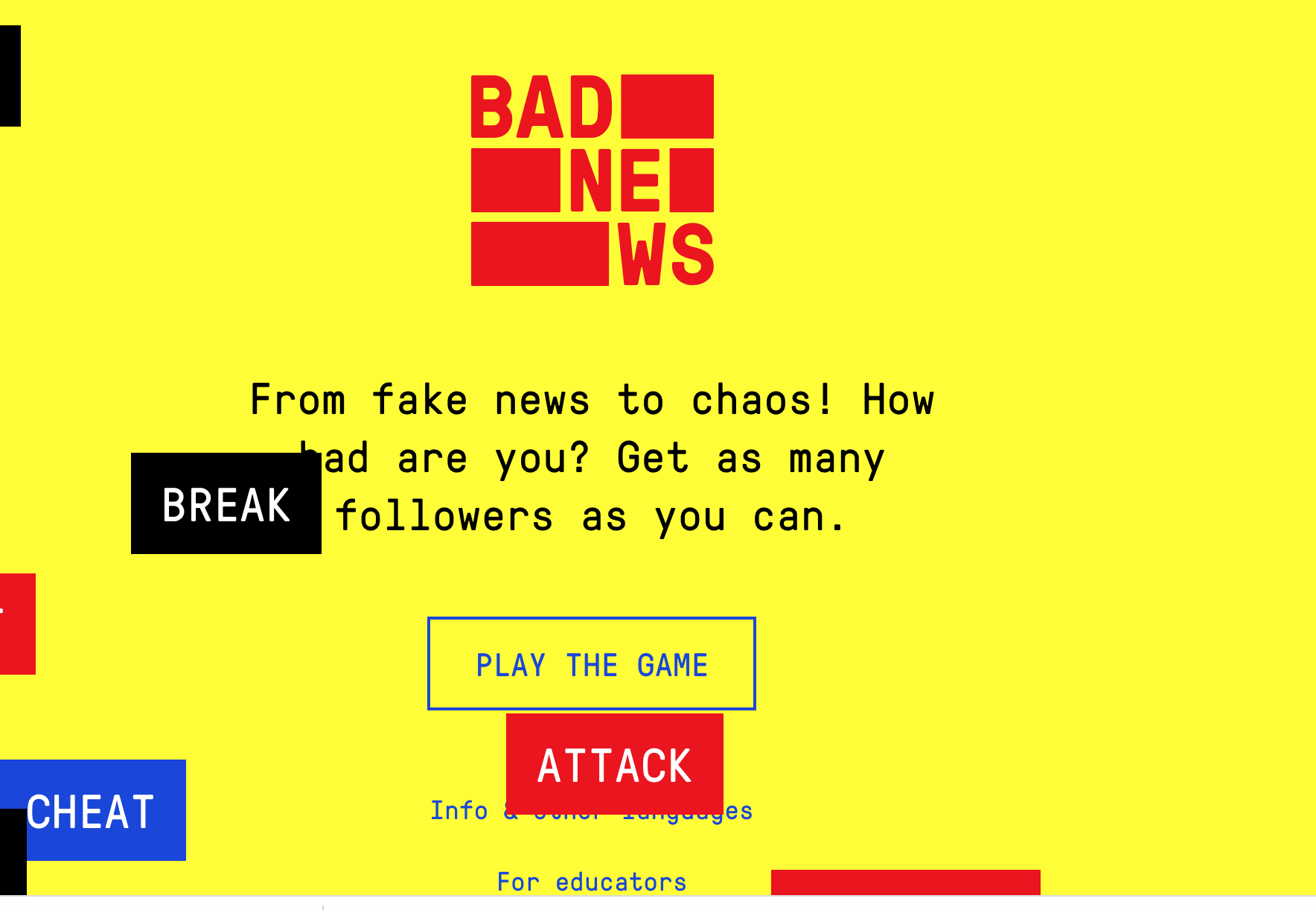
For their study the authors designed what they describe as “a psychological intervention in the form of an online browser game.” The authors write that in the game, “players take on the role of a fake news producer and learn to master six documented techniques commonly used in the production of misinformation: polarization, invoking emotions, spreading conspiracy theories, trolling people online, deflecting blame, and impersonating fake accounts.”

They add that the game “draws on an inoculation metaphor, where preemptively exposing, warning, and familiarizing people with the strategies used in the production of fake news helps confer cognitive immunity when exposed to real misinformation.”

(Read more about the “bad news” game.)

The winning paper was one of three selected – from a pool of more than 70 entries – as finalists for this year’s annual prize competition. In addition to the $10,000 grand prize for peer-reviewed academic research that informs the growing discipline of public interest communications, the Center for Public Interest Communications awards $1,500 to each of the two other finalists. A review committee of scholars and practitioners selected the three papers for this year’s competition.

The finalist papers are:

Credibility-Enhancing Displays Promote the Provision of Non-Normative Public Goods

Authors: Gordon T. Kraft-Todd, Department of Psychology, Yale University; Bryan Bollinger, Fuqua School of Business, Duke University; Kenneth Gillingham, School of Forestry & Environmental Studies, Yale University; Stefan Lamp, Toulouse School of Economics, University of Toulouse Capitole; and David G. Rand, Sloan School and Department of Brain and Cognitive Sciences, Massachusetts Institute of Technology.

How Hope and Doubt Affect Climate Change Mobilization

Authors: Jennifer Marlon1, Brittany Bloodhart2 , Matthew T. Ballew1, Justin Rolfe-Redding3, Connie Roser-Renouf3, Anthony Leiserowitz1 and Edward Maibach3
1School of Forestry and Environmental Studies, Yale University; 2Department of Psychology, Colorado State University; and 3Center for Climate Change Communication, George Mason University

Read more about the research prize.
 

Total
0
Shares
Share 0
Tweet 0
Share 0
Previous Article
  • Center Update

Latest Issue of Journal of Public Interest Communications Now Available

  • January 7, 2020
View Post
Next Article
  • Center Update

Ann Christiano Reflects on her 10-year Quest to Build the Field of Public Interest Communications

  • May 6, 2020
View Post
Professional Development
  • Strategic Communications Academy for UF Leaders & Scholars
  • Science Communications Course 
  • Beyond raising awareness: How to create lasting change
More of our work
  • How We Are Making Sure The Science We Share Is Good
  • Photo by -slav-
    This Untapped Tool Could Help Boost Vaccination Rates
  • Building the Field of Public Interest Communications
  • Philanthropy's New Voice: Building Trust with Deeper Stories and Clear Language
    Philanthropy’s Messaging Creates Confusion. Telling Better Stories Can Build Trust
Latest from the Center
  • Most Americans Support Freedom of Information. Almost None Have Ever Used It.
  • October 2025 nationwide survey sheds light on Americans’ increasing worry about housing affordability
  • 2025 ‘Real Good Census’ Reveals a Strategically Vital Field with Strong Rewards, Marking Significant Growth
  • composite image of Audrey Goldfarb and text stating "Science isn't personal: why communicating emotion isn't 'soft,' it's strategic"
    Changemakers in Action: Dr. Audrey Goldfarb
How We Help – Case Studies
  • Staff professional development via ‘drip’ training integrated in Slack
  • Council on Foundations - Largest study on narratives about philanthropy
    Largest Study on Narratives About Philanthropy with the Council on Foundations
  • illustration
    Innovation Service of UNHCR: the UN Refugee Agency
UF Logo

Center for Public Interest Communications
PO Box 118400
Gainesville, FL 32611-8400

An auxiliary unit of the College of Journalism and Communications

Copyright © 2026

Contact Us

We are eager to chat with you about your project or training need.

Send us a note

The Center for Public Interest Communications, the first of its kind in the nation, is designed to study, test and apply the science of strategic communication for change. We are based at the University of Florida College of Journalism and Communications.

  • Change Communication
  • Science Communication
  • Strategic Communication
  • Broader Impacts
  • Public Interest Communication
  • Narrative Change
  • Leadership Development
  • Strategy Development
  • Effective Presentations
  • Research Translation & Insights

Input your search keywords and press Enter.